Jumleena
TYPE OF WORK
Speculative design
Showcase

Overview
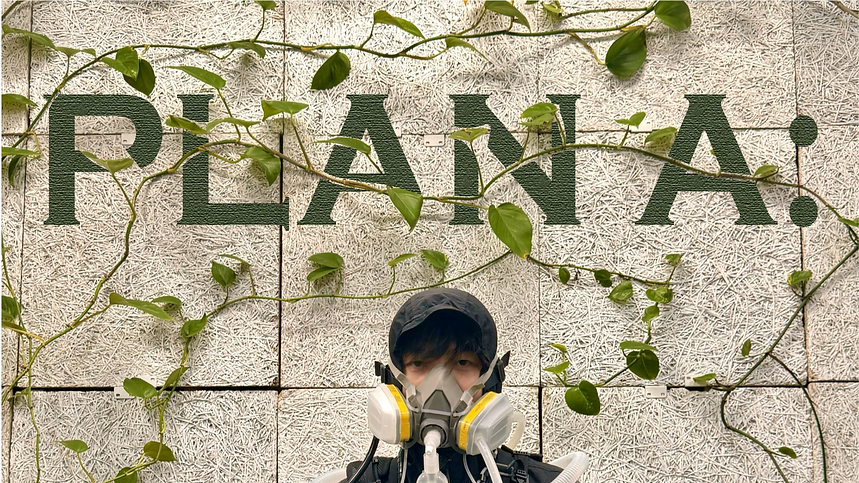
What if the last flower on Earth existed only as a digital relic? No petals to touch, no scent to breathe in, just pixels of a memory of what once was. What if plants became our lifeline for survival in a world collapsing under its own weight?
Plan A: Plant Planet imagines a future in 2050 where humanity has driven nature to its breaking point. At its heart is the story of a botanist who becomes a guardian of what remains, in a world where plants are no longer seen as ornaments or resources but as our last fragile companions in survival — compelling us to face the consequences of a broken relationship with the natural world.
AT A GLANCE
METHODOLOGY
User interviews · Stakeholder workshops · Moodboards · World-building · Iterative prototyping
GOAL
Raising awareness, fostering connection with nature, and promoting sustainable behaviors.
SPONSOR
Chelsea Physic Garden, Priviglaze
Role
Strategist · Team of 3 designers · Budget + prototype management


The Botanist’s Story
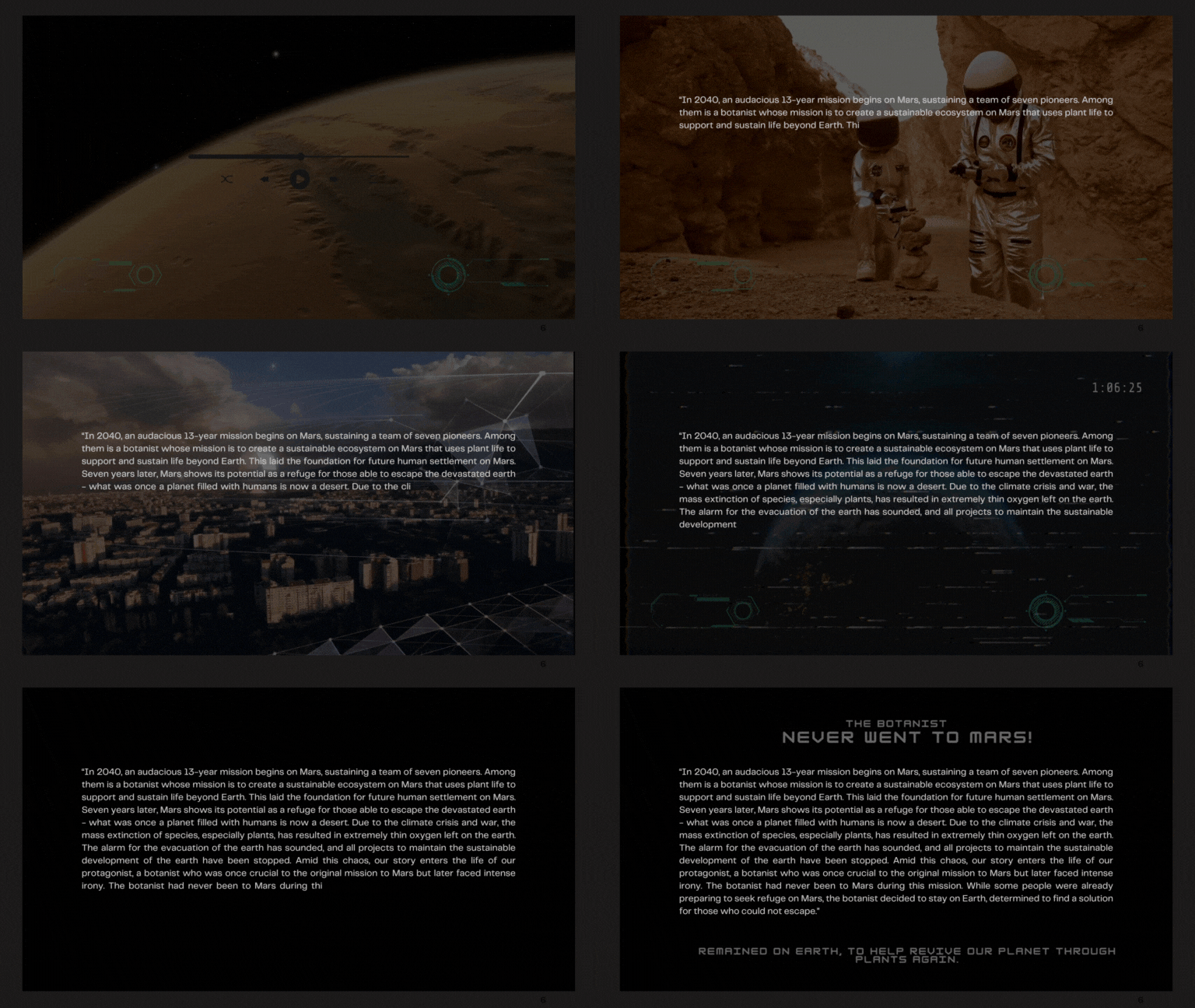
In 2040, a botanist worked quietly on Earth, creating the plant-based systems that would make Mars livable. Their work gave humanity its second chance — a fragile ecosystem on a distant planet.
But as Mars began to bloom, Earth withered. Forests fell silent, the air thinned, and life collapsed into dust. When the ships departed for new worlds, the botanist stayed. Not to escape, but to remain with a dying planet and the billions who could not leave.

Botanist

Botanist

Botanist

2050 Landscape
Now, in 2050, they walk among the last fragments of green. Guardian, witness, and caretaker, the botanist embodies a question that belongs to us all: Do we turn away from Earth and chase survival elsewhere, or do we take responsibility for the world that gave us life?

The Botanist’s choice cannot be understood without the world they lived in. This is how we arrived in 2050.
Timeline of Collapse

1
Human activities intensify climate disruptions, triggering extreme weather events, devastating ecosystems, and sparking the first serious talks about colonizing Mars.

2
The rapid decline of plant and animal species reshapes Earth’s ecosystems, threatening food chains and human survival. Pollinator populations dwindle, further accelerating the crisis.
A team of seven pioneers establishes humanity’s first sustainable Martian habitat, igniting global interest.

3
Simultaneously, Earth faces worsening droughts and soil degradation, turning once-fertile lands into arid wastelands.
3
4
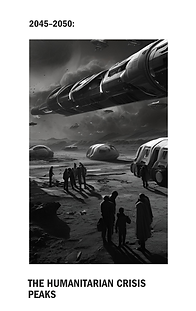
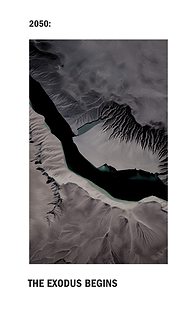
Mass migrations, social unrest, and barren landscapes define Earth’s final years. Governments race to develop advanced spacecraft for mass relocation to Mars as a last resort.
5
Mars becomes humanity’s new frontier, offering hope for survival. As Earth’s ecosystems collapse, migration programs promise a chance at a fresh start, leaving many questioning the ethics of abandoning their home planet.
Relics from 2050: Artifacts of Survival
SECTION 4

Survival Suit Powered by Plants: The Plant Suit functions as a hybrid life-support and filtration system. Multiple pipes link the wearer’s breathing mask to a central heart-shaped chamber containing a living plant. Exhaled carbon dioxide is directed into the chamber, where the plant metabolizes it through photosynthesis, releasing oxygen that is cycled back to the wearer.
Simultaneously, intake valves draw in small volumes of outside air, which pass through the plant chamber for partial detoxification before re-entering the respiratory circuit. The result is a closed-loop cycle, supplemented by limited atmospheric exchange — a fragile collaboration between human, plant, and environment.
“Closed-loop respiration cycle. Human breath feeds the plant, the plant releases oxygen, and fragments of outside air pass through for filtration. Survival reduced to a fragile collaboration of species.”

The Ecological Chamber is a transparent wall-mounted bioreactor designed to host a small living ecosystem indoors. Within its sealed environment, plants metabolize carbon dioxide and release oxygen, creating a closed-loop exchange with human breath.
The chamber features a responsive interface that turns opaque when approached, emphasizing the fragility of the system and the privacy of the life inside. Both air purifier and ecological shrine, the chamber reimagines the home as a site of interspecies collaboration.

The Shrine of the Last Flower is both memorial and interface. At its center rests a fractured 3D-printed vase embedded with an NFC tag that connects to a digital archive of extinct flowers.
Housed within a wax-and-wood enclosure, the shrine reveals a projection of a vanished daffodil, accompanied by excerpts from the botanist’s journal. More than an object, it acts as an ecological reliquary, preserving memory through technology, even as life itself has disappeared.

SECTION 5
Title: Field Notes from 2050
Behind every artifact lies a record of care. These are the Botanist’s notes —
2050.01.03
The air tastes thin this morning. The chamber fogged with condensation overnight. Droplets clinging to the glass like it, too, is holding its breath. The plants inside stir slowly, They're fragile but alive. Survival now depends on attention, care, and patience measured in hours, Not years.


2050.12.10
Witness, fellow dwellers of Eden’s remnants. I write these words with a heart heavy from loss. The world I knew, our rivers and our forests that once carried us has withered. We chased other worlds, built domes on Mars, and left our home gasping. I grieve for the choice of some to abandon, and for the billions who could not leave.
The air grows thin. And each breath is measured. The silence of vanished species is louder than any storm. This is not just a collapse of climate, or politics, or economy. It is a collapse of vision. We forgot what sustains us. We mistook abundance for permanence. And in our blindness, we turned away from the simplest truth.
I come bearing one such simple truth. Plants, the quiet ones, are not ornaments. They not resources to be only consumed and discarded. They are the makers of breath, the keepers of soil, the givers of shade and seed. They are our co-creators, the green architects of survival itself. Without them, we do not eat. Without them, we do not breathe. Without them, we do not exist.
This Earth, has many wounds, and now its daffodil blooms only in memory. I am a boatnist and I am a dying breed. But I see ways to sustain us through my expertise..
Let me remind you, the smallest leaf carries more power than our greatest machines. The simplest seed carries more future than our grandest plans. If we listen, if we tend, if we protect, I say, there is still time.
I leave these words as a cry of urgency and a call to kinship. I write them for those who remain. For the survivors who walk this broken Earth, for the children who still breathe thin air, for the caretakers who refuse to let the green vanish entirely. From grief, let determination rise. From scarcity, let us remember abundance. From the last daffodil, let us plant a thousand more. From blindness, let us learn to see.
The plants will meet us halfway, if we are willing to walk with them.
This is my vow. May it become yours. In their roots, we may yet find our own.
The future is not yet lost.
SECTION 6
Title: Field Notes from 2050
Not all revolutions are loud. Some are green and quiet, sprouting from soil and patience. To grow a plant in a dying world is to resist despair. To tend to roots is to refuse extinction.
This is not war. It is not protest. It is survival through kinship. A revolution of care, where every seed planted is a declaration that life must go on, not just for us, but with all that breathes beside us.
The Botanist’s notebook ends here. How would you carry it forward? Write an ending to this story, or imagine a different timeline altogether. Your fragment will join the Living Archive.
SECTION 6
Title: Field Notes from 2050
Listening to different users
In the initiation of Project Plan A: Plant Planet, we embarked on a foundational phase, meticulously grasping the quintessential components and prevailing sentiments surrounding plants through rigorous secondary research. To amplify our understanding, we conducted nuanced interviews with key stakeholders, botanists, and the general public—an endeavor marked by paired interactions to capture a diverse spectrum of experiences.
Upon methodically collecting and dissecting the interview data, we synthesized our findings into a comprehensive report. Recognizing the palpable disconnection between individuals and nature, we strategically formulated the project's components. Opting for storytelling as our primary medium, we sought to narrate a compelling message aimed at reshaping priorities toward our shared Earth.
In the intricate landscape of our project, designed to foster a profound understanding of individuals' relationships with plants and unveil the intricate connections within our ecosystem, ongoing collaboration with Plan A's key contacts was pivotal. This deliberate engagement ensured the seamless harmonization of our three provocative prototypes with user expectations.
Visual design strategy
To instill a sense of urgency, we recognized that prototyping, particularly provocative prototyping, serves as a pivotal instrument in fostering comprehension of interspecies relationships and acknowledging the symbiotic link between humans and plants. Crafting a narrative featuring fictional yet symbolic milestones, we delineate a trajectory toward a dystopian era. Drawing inspiration from Arup's meticulously researched "Extinction Express" within the 2050 Scenarios, our prototype designs are underpinned by a scenario envisioning environmental collapse and societal disintegration. This dystopian projection, derived from Extinction Express, accentuates the profound repercussions of climate change-induced destabilization and resource scarcity on the human-plant relationship. Our scenario prompts critical inquiries into the need for humanity's extreme resilience in the absence of a harmonious connection with nature, strategically utilizing provocative prototyping to convey these intricate dynamics and evoke a compelling sense of urgency.


Response to insights
In developing the three prototypes for "Plan A," we embraced the methodology of professional speculative designers. Our journey began with an extensive world-building process, immersing ourselves in a future where plants are crucial for ecosystem survival. Crafting a narrative further illuminated the dependencies on plants, guiding our design direction. Finalizing the prototypes, blending digital and physical elements, reflected an iterative process addressing challenges envisioned in our narrative. Inspired by the seamless integration seen in professional designs, our approach aimed to provide a cohesive, tangible experience, fostering a profound understanding of our intricate relationship with plants within the ecosystem.
In crafting the three prototypes for "Plan A," we drew inspiration from a wide variety of sources: from the research paper on “Anthropocentric Habitation of Mars Through Parametric Design” to sci-fi movies such as Blade Runner, Creator, AI etc, to gathering insights on our future scenario with Nell Joan (Chelsea Physic Garden Botanist and the inspiration of our main character in our storyline) to previously done speculative design projects in order to employ a more comprehensive approach.
Prototype Testing
We tested our storyline with different users and made a few amendments based on the feedback received, some of the feedback proved to be so meaningful as it helped shape our direction altogether. We then used this feedback to focus our efforts on highlighting the prototypes and critically evaluating their existence in the future and removed any unnecessary additions to our design that could potentially deter from the main storyline.
Using the insight from the mood board workshop, we developed our diegetic prototypes which soon saw its evolution into eco-art activism. These diegetic prototypes included the following: a sealed ecological chamber hosting plants used to improve indoor air quality, a shrine of the last flower on earth, and the plant suit.
Creation of design
For our "Plan A" project, Chelsea Physic Garden played a pivotal role, offering guidance and assistance with plant-related aspects. The collaboration extended to an interview with Nell Jones, the botanist whose insights shaped the design of our main character. Additionally, Priviglaze contributed to our project by providing their technology, enhancing our design process.
 |  |  |
|---|---|---|
 |  |  |
BEHIND THE SCENE (MAKING PROCESS)
This gallery provides a glimpse into our behind-the-scene-making process through our own documentation. This segment holds witness to the meticulous craftsmanship and innovation that breathe life into our creations.


Future Aspects
In developing the three prototypes for "Plan A," we embraced the methodology of professional speculative designers. Our journey began with an extensive world-building process, immersing ourselves in a future where plants are crucial for ecosystem survival. Crafting a narrative further illuminated the dependencies on plants, guiding our design direction. Finalizing the prototypes, blending digital and physical elements, reflected an iterative process addressing challenges envisioned in our narrative. Inspired by the seamless integration seen in professional designs, our approach aimed to provide a cohesive, tangible experience, fostering a profound understanding of our intricate relationship with plants within the ecosystem.
In crafting the three prototypes for "Plan A," we drew inspiration from a wide variety of sources: from the research paper on “Anthropocentric Habitation of Mars Through Parametric Design” to sci-fi movies such as Blade Runner, Creator, AI etc, to gathering insights on our future scenario with Nell Joan (Chelsea Physic Garden Botanist and the inspiration of our main character in our storyline) to previously done speculative design projects in order to employ a more comprehensive approach.
